

SEMATA Pushes for Regulatory Reform & Transparency in Mining Permits (PETI) in North Sumatra as an Urgent Environmental Protection Measure
POLICY ADVOCACY & NATURAL RESOURCE GOVERNANCE
Fhay! - SEMATA Newsroom
5/8/20243 min read


AI Caption:
"Illustration of the impact of illegal small-scale mining (PETI) on the riverbanks of Sumatra — depicting environmental degradation that inspires SEMATA Indonesia's advocacy."
Medan, January 7, 2026 — SEMATA Indonesia has assessed the widespread practice of Illegal Small-Scale Mining (PETI) in North Sumatra as reaching an ecological emergency level, and requiring systemic reform in licensing policies and mining oversight. This assessment was issued in response to the wave of environmental damage caused by uncontrolled PETI activities.
SEMATA emphasizes that the PETI issue is not merely a matter of law enforcement but is a deeper reflection of the systemic failure in natural resource governance — including complex regulations, a lack of transparency, and weak oversight and accountability.
In an official statement by Secretary General of SEMATA Indonesia, Feiruz Rizki, the organization highlights that lack of clarity in licensing procedures, convoluted processes, and limited public access to information have opened spaces for illegal PETI practices, which lead to environmental destruction, loss of land productivity, and threats to public safety in several areas of North Sumatra.
“PETI is a consequence of a regulatory system that is inconsistent, lacks transparency, and is not aligned with sustainability principles. As long as the licensing system is not reformed, illegal practices will continue to thrive,” stated Feiruz in SEMATA’s press release
SEMATA notes that the complexity of regulations, the lack of public access to information, and the absence of community participation in the licensing process can lead to policy distortions, from bureaucratic inefficiency to potential abuse of authority. This issue is further exacerbated by weak social control mechanisms due to limited data transparency.
“Without transparency, the public lacks the tools for control. Openness is the key to building trust and preventing non-procedural practices that harm the environment and disadvantage the community,” Feiruz added.
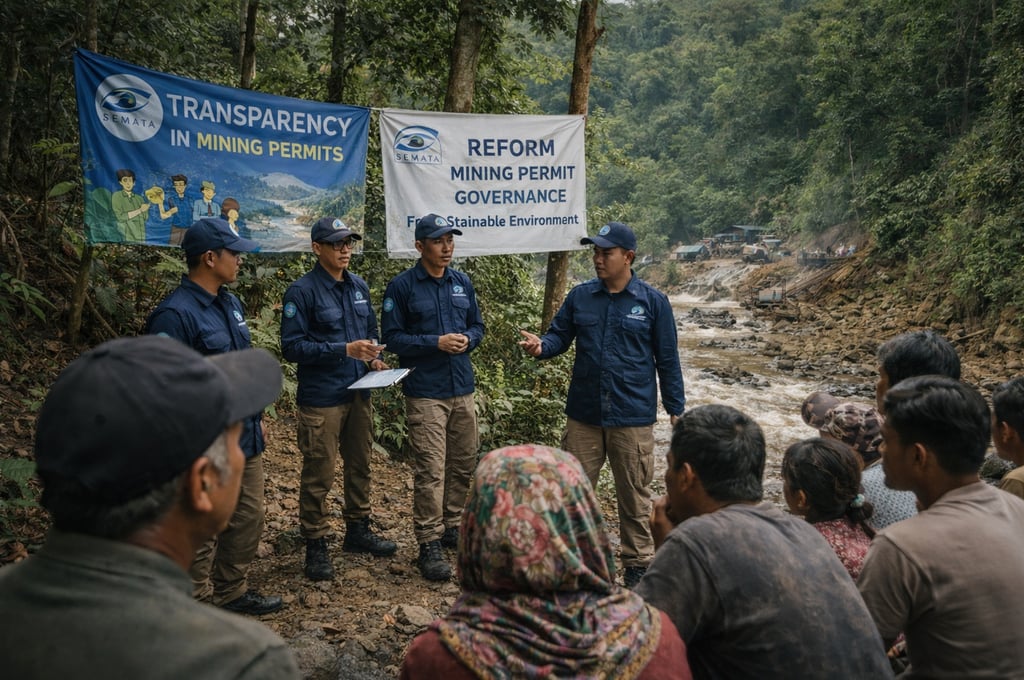
AI Caption:
SEMATA Indonesia field team discussing regulatory reform and environmental sustainability with the local community.
SEMATA’s Concrete Policy Recommendations
To address the PETI governance crisis in North Sumatra, SEMATA proposes a number of strategic and evidence-based measures:
Evaluation and Restructuring of Licensing Regulations
To align with environmental sustainability principles, legal certainty, and community empowerment.Improving Public Transparency in Public Services
Including opening access to information regarding the licensing process, official fees, and completion timelines to the public.Strengthening Multisectoral Oversight
Involving government agencies, civil society, academia, and directly impacted communities.Systemic Preventative Approach
Shifting the focus from merely reactive measures to a preventative approach based on systematic reform.Local Government Response to Ecological Emergency
The North Sumatra provincial government is urged to immediately formulate responsive policies to address the environmental conditions that are nearing unsafe levels.
Role of Students & Public Participation
SEMATA also emphasizes that the student protests against weak regulations and the lack of transparency in PETI governance are a form of healthy deliberative democracy. These aspirations should be seen as constructive inputs for public policy improvement, not as social disruptions.
“Transparent and participatory governance is not just an administrative issue. It concerns environmental protection and justice for future generations,” Feiruz concluded.
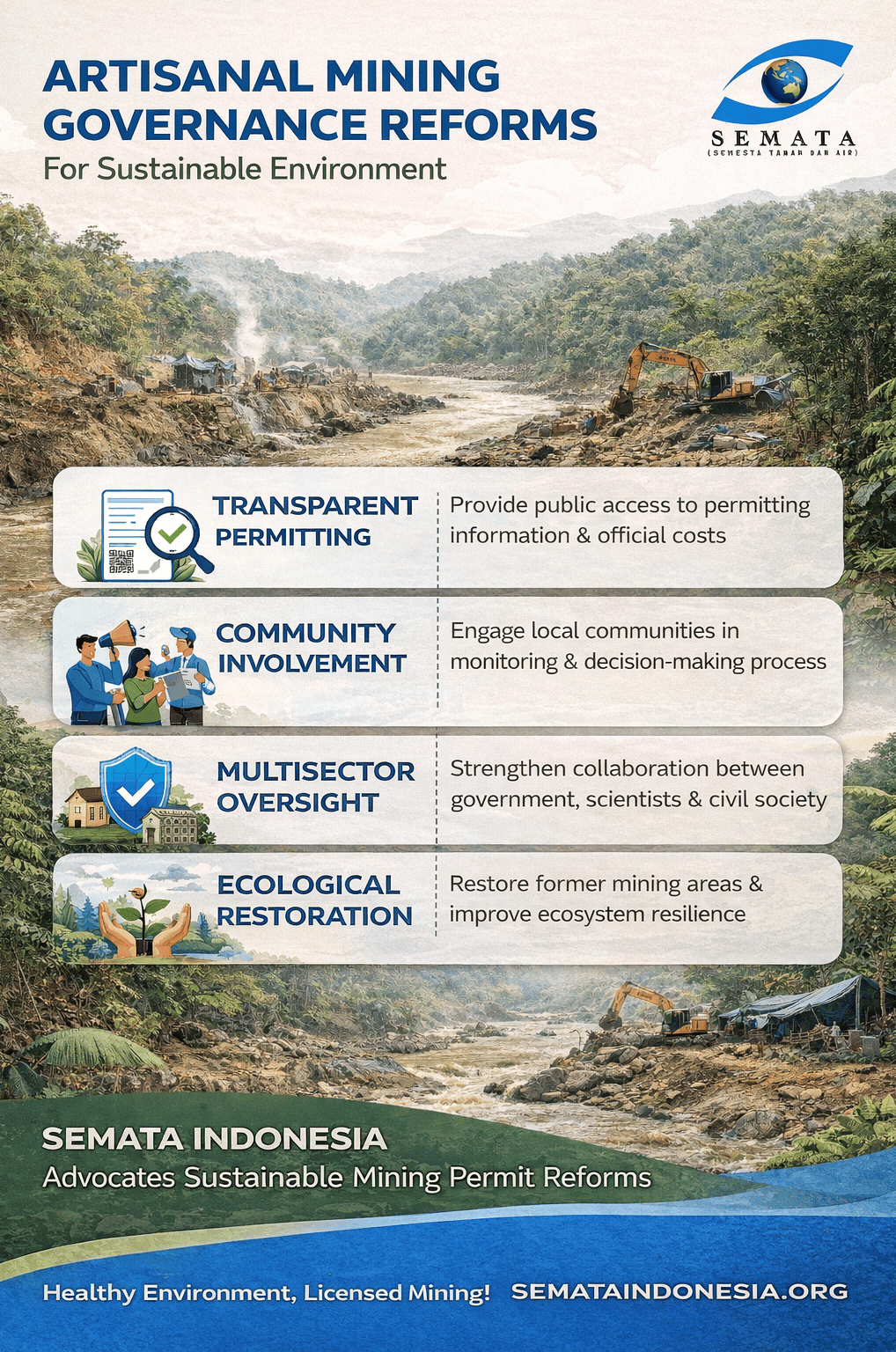
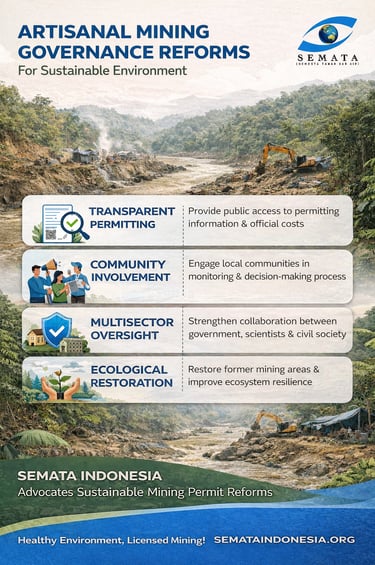
AI Caption:
Infographic illustrating SEMATA Indonesia’s proposed reform for governing illegal small-scale mining (PETI).
SEMATA Indonesia’s Commitment
As an organization focused on policy advocacy, scientific research, and public monitoring, SEMATA reaffirms its commitment to continue playing an active role in driving the reform of natural resource governance that is integrity-based, equitable, and sustainable in North Sumatra and its surrounding areas.
Source: SahabatNews.com, adapted and developed by SEMATA Indonesia.
Photo: AI-generated / SEMATA Newsroom
SEMATA INDONESIA
Protecting forests, coasts and wildlife with community, science and sustainability
CONTACT US
admin@semataindonesia.org
© 2026. SEMATA INDONESIA | Forest, Coastal and Wildlife Conservation. All rights reserved.






+62 852 6745 9070


Jl. HM. Joni - Aman 1 No. 09, Kel, Teladan Barat, Kec. Medan Kota, Kota Medan, Sumatera Utara, 20216
SUBSCRIBE US